LOADING IMAGES

Description
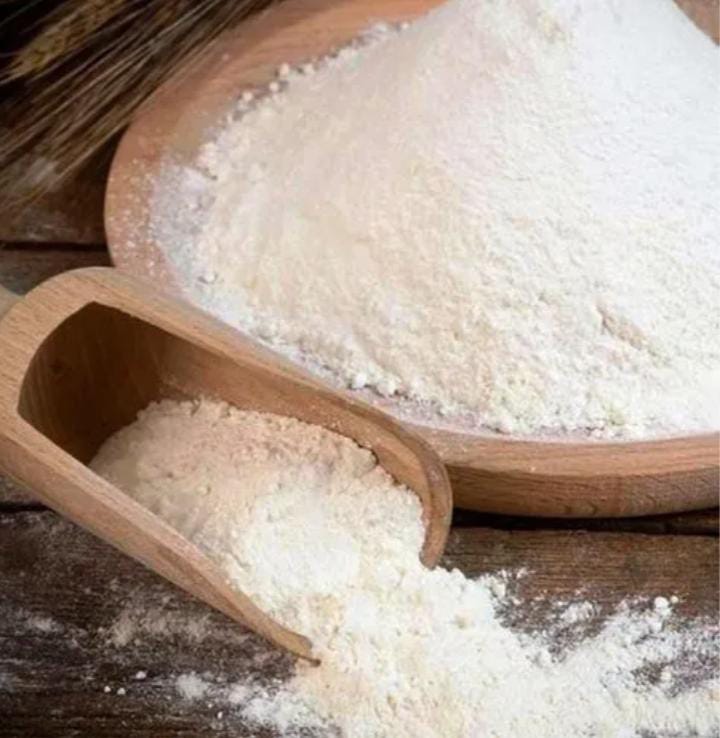
Description of Flour Flour is a finely ground powder made by milling grains, seeds, nuts, roots, or vegetables. It is a fundamental ingredient used in a vast range of foods, including baked goods (like bread, cakes, and pastries) and as a thickening agent for sauces and gravies. Key Characteristics Primary Source: The most common type is wheat flour, which is a staple food in many cultures, especially for making bread. However, flour can be made from many sources like rice, corn, oats, almonds, and legumes. Composition: Wheat kernels (grains) have three main parts, and the type of flour depends on which are included in the milling process: Endosperm: The starchy inner part, high in carbohydrates and protein. Refined (white) flour consists mainly of the endosperm. Bran: The outer layers, which add fiber and nutrients. Germ: The embryo of the grain, rich in oil, vitamins, and minerals. Whole-grain flour includes the endosperm, bran, and germ. Gluten: In wheat flour, protein content determines the amount of gluten that can be developed. Gluten provides the elasticity and structure necessary for many baked goods: High-protein (Hard) Wheat: Used for bread flour to create a strong, chewy texture. Low-protein (Soft) Wheat: Used for cake and pastry flour to produce a soft, tender crumb.